Products

CITIS AI Academy

Computational Thinking, Coding & Artificial Intelligence for K–12

Think. Build. Command.

Preparing students for the AI-powered world

The CITIS AI Academy is a comprehensive K–12 program designed to develop the skills children need to thrive in an increasingly digital and AI-driven world.

Developed in technical collaboration with CODMOS, South Korea, the program brings together Computational Thinking, Coding Foundations and AI Fluency into one structured learning pathway. Rather than treating coding and Artificial Intelligence as disconnected technology subjects, the Academy develops students progressively—from learning how to think and solve problems, to building with code, to understanding and responsibly using AI.

THINK with Computational ThinkingBUILD with CodingCOMMAND with AI

Why CITIS AI Academy?

From Digital Users to Digital Creators

Today's children are growing up surrounded by technology and Artificial Intelligence. However, simply using digital devices does not necessarily develop digital literacy, computational thinking or AI fluency.

Students need to understand how technology works, how problems can be broken down, how solutions can be designed and how AI can be used intelligently and responsibly.

The CITIS AI Academy addresses this need through a structured, age-appropriate and progressive learning journey that develops logical reasoning, problem-solving, pattern recognition, algorithmic thinking, coding and AI capabilities.

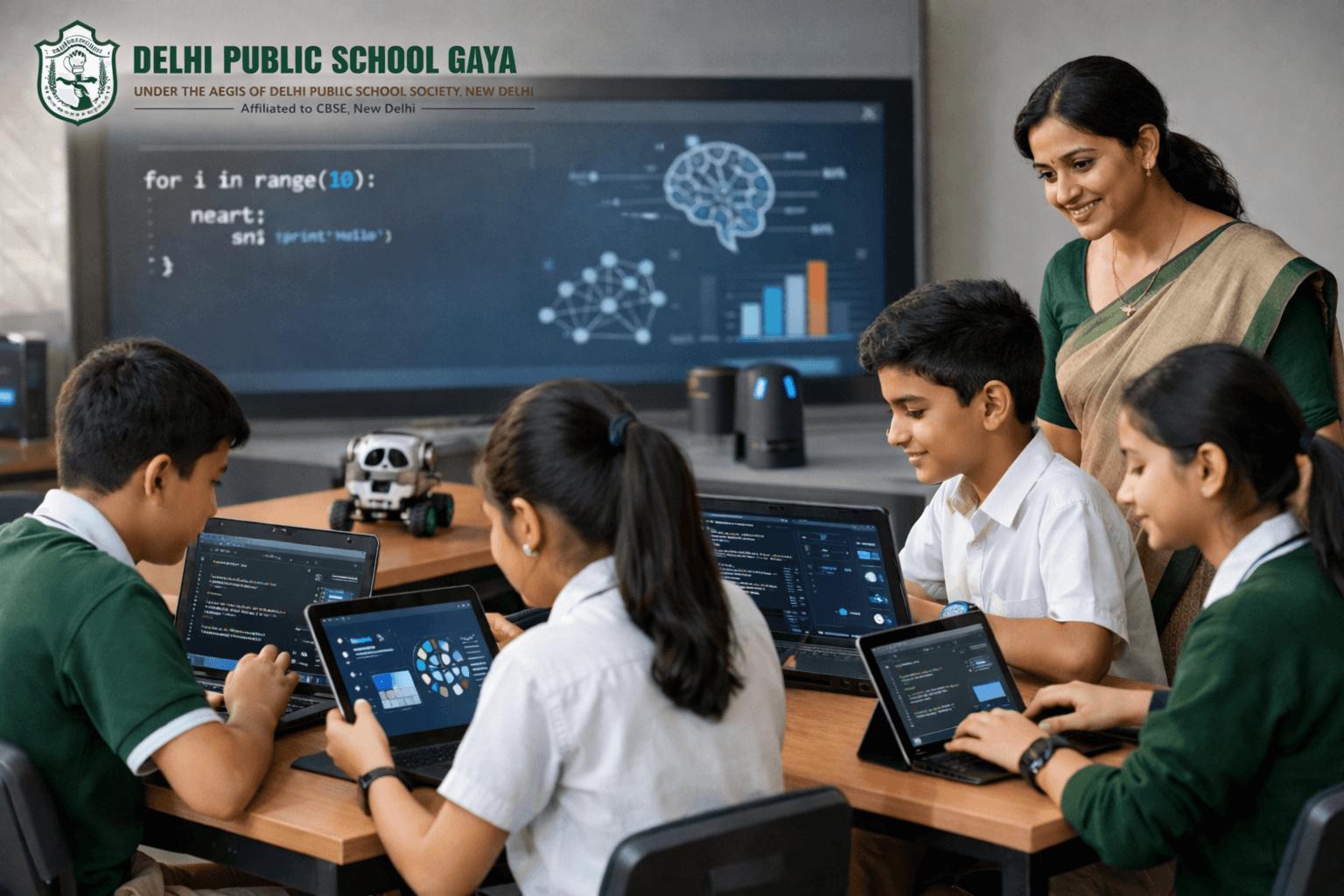
Students learning with laptops alongside their teacher

Technical Collaboration with CODMOS, South Korea

Bringing a Global AI-Era Learning Framework to Indian Schools

CITIS AI Academy is offered in technical collaboration with CODMOS, South Korea, bringing a structured international approach to K–12 Computational Thinking, Coding and AI education to institutions in India.

CODMOS is designed as an AI-era learning system for K–12 institutions, connecting computational and mathematical thinking, coding foundations and AI fluency through a single learning pathway.

The CODMOS curriculum is developed in South Korea and is presented for Indian institutions as an Indian classroom-ready, NEP 2020-aligned program.

CODMOS brings the technology and curriculum framework.

CITIS brings the institutional implementation, academic integration and India-focused education ecosystem.

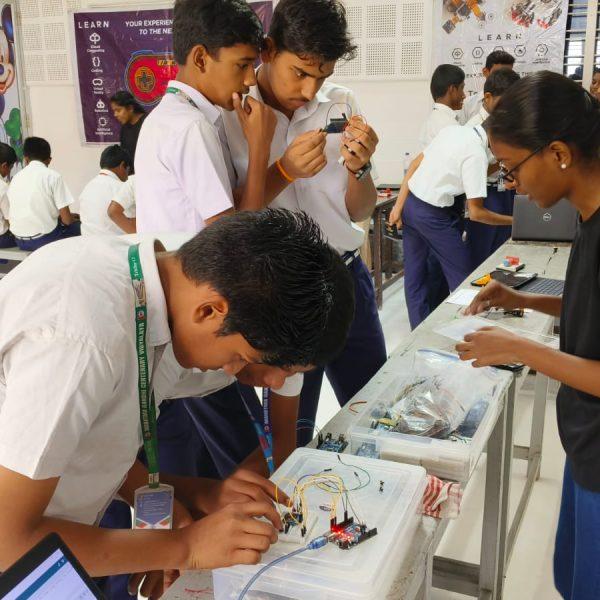
Students collaborating in a coding and robotics lab

The CITIS AI Academy Learning Framework

THINK → BUILD → COMMAND

01 — THINK

Computational Thinking

Students first learn how to think before they learn how to code.

Computational Thinking helps students break complex problems into smaller parts, identify patterns, understand relationships, develop logical reasoning and create step-by-step solutions.

These capabilities are transferable across Mathematics, Science, ICT and project-based learning.

Students develop:

  • Logical reasoning
  • Problem decomposition
  • Pattern recognition
  • Abstraction
  • Algorithmic thinking
  • Problem-solving
  • Computational and mathematical thinking
02 — BUILD

Coding Foundations

Once students learn to structure their thinking, they learn to convert ideas into working solutions.

Coding is introduced progressively through icon/block-based programming, interactive missions, games and problem-solving activities, moving towards more advanced programming concepts and Python pathways.

Students learn to create, test, debug and improve their solutions.

Students develop:

  • Programming logic
  • Algorithms
  • Sequential thinking
  • Loops
  • Conditions
  • Variables
  • Events
  • Functions
  • Data and analysis
  • Game development
  • Python foundations
  • Debugging and problem-solving

03 — COMMAND

AI Fluency

The final stage is not simply learning about AI, but learning how to understand, question, use and apply AI responsibly.

Students are introduced to age-appropriate AI concepts including recognition, classification, generative AI and AI-based problem-solving. They also explore issues such as bias, privacy and responsibility.

The objective is to help students use AI with judgement rather than dependency.

Students develop:

  • AI literacy
  • Understanding of AI
  • AI recognition and classification
  • Generative AI awareness
  • AI problem-solving
  • AI ethics
  • Responsible AI use
  • Understanding of bias and privacy
  • Ability to question AI outputs
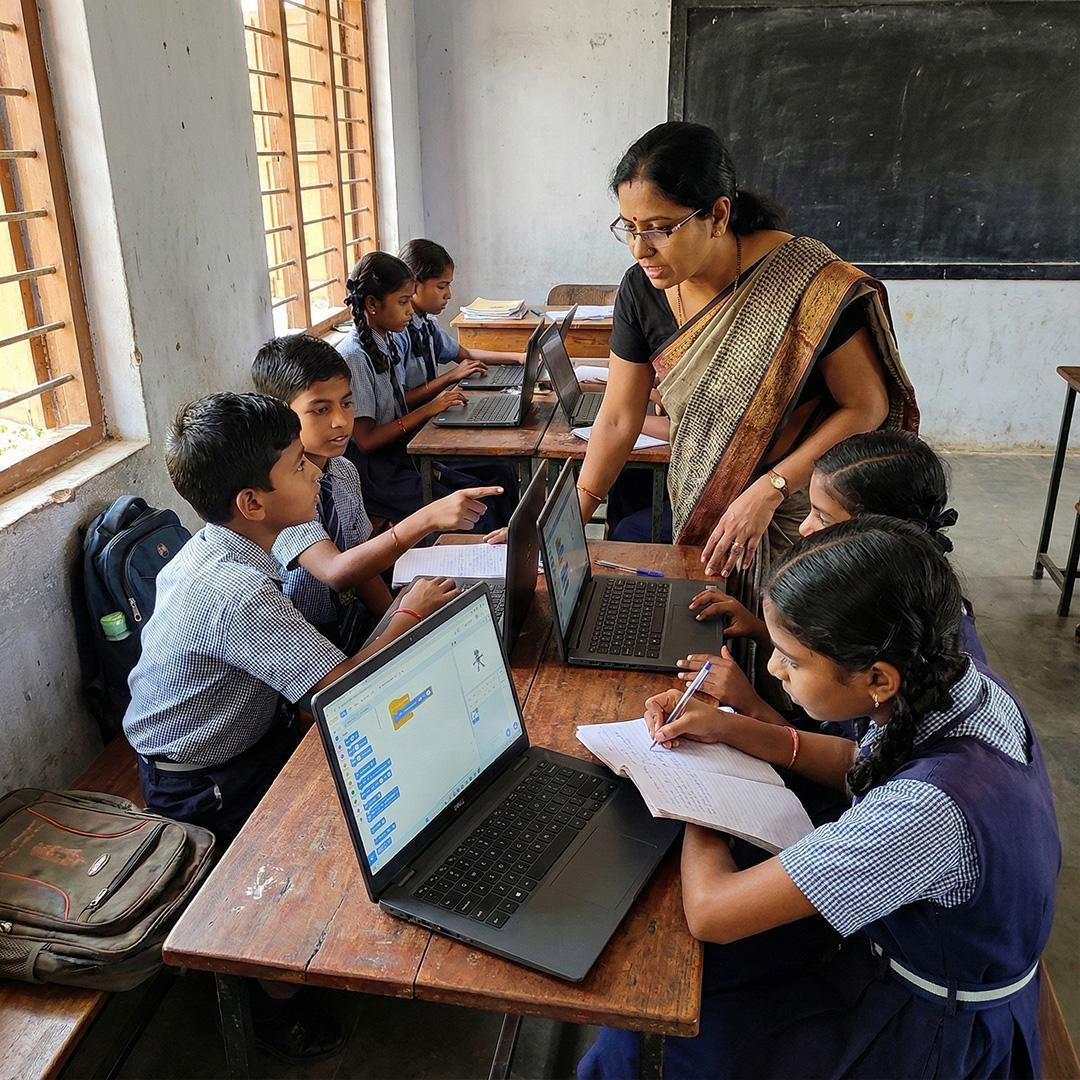
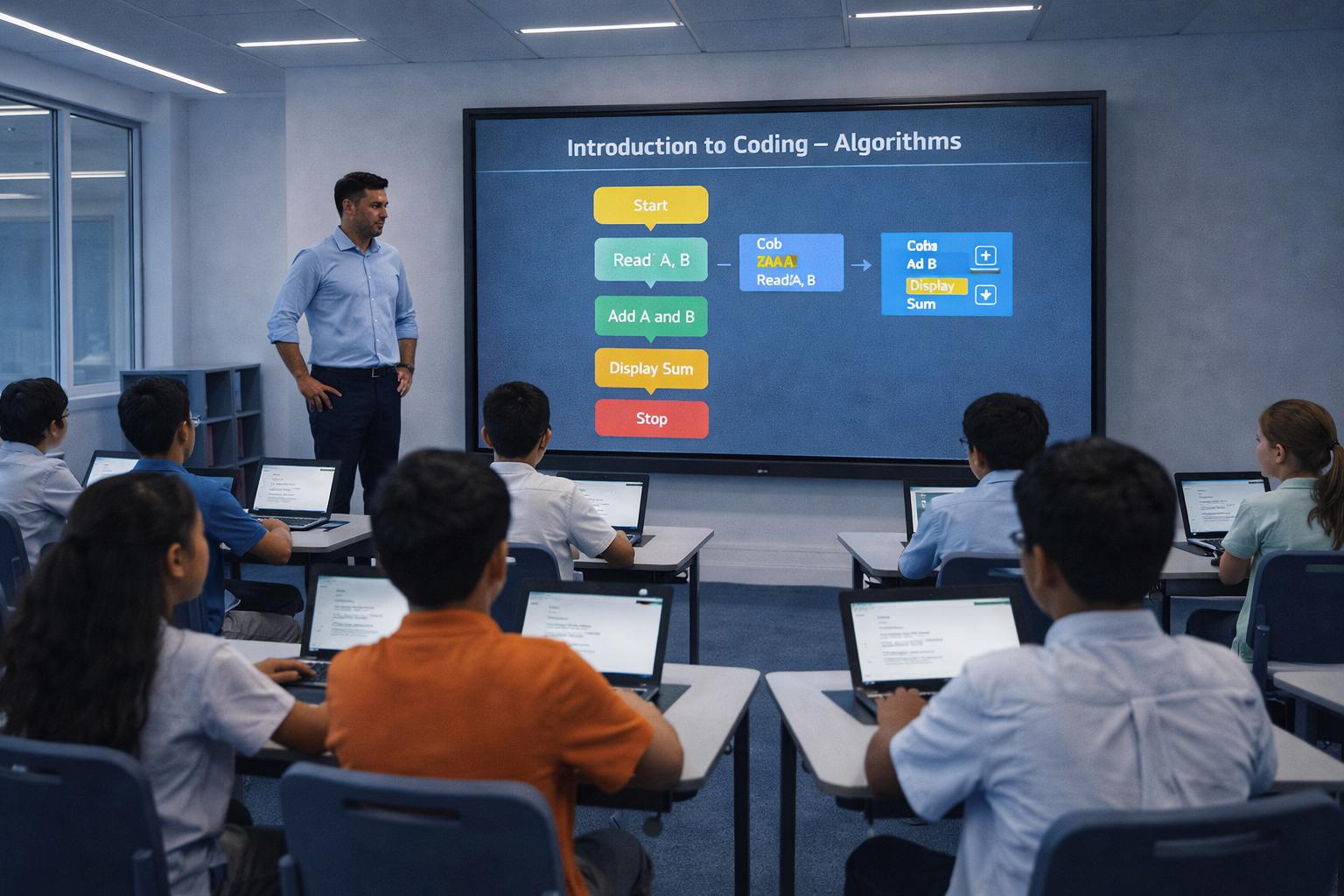
Students learning coding algorithms in a classroom

A Progressive K–12 Learning Journey

The Academy follows a grade-banded progression, allowing students to build capabilities continuously rather than repeating the same introductory coding experience every year.

Foundation / Introductory

Students begin with computational thinking diagnostics, spatial and arithmetic puzzles, icon-based coding and basic AI recognition activities.

Foundation

Students progress into sequences, loops, conditionals, data collection, game-making and introductory AI concepts.

Advanced

Students explore automation, simulation, variables, events, AI learning principles and STEAM + AI projects.

Mastery

Students move towards Python foundations, debugging, AI classification projects, generative-AI problem solving and responsible AI use.

What Students Learn

The Academy brings together multiple areas of future-ready technology education within one connected pathway.

Computational Thinking

Problem-solving, decomposition, patterns, abstraction and algorithms.

Algorithms & Programming

Programming logic, sequences, loops, conditions, variables, events and functions.

Data & Analysis

Understanding, collecting and analysing data.

Coding & Game Development

Learning through interactive missions, games and creation-oriented activities.

Python

Progressive introduction to Python programming at appropriate levels.

Artificial Intelligence

AI concepts, recognition, classification and AI applications.

Generative AI

Age-appropriate exposure to generative AI and AI-powered problem solving.

AI Ethics & Digital Responsibility

Bias, privacy, responsibility and appropriate use of AI.

The underlying CODMOS curriculum covers areas including Digital Literacy, Computing Systems, Data, Algorithms & Programming, Maker, Artificial Intelligence, Digital Culture and Computational Thinking across progressive levels.

Learning Through Missions, Challenges & Projects

Make Learning an Experience

CITIS AI Academy moves beyond traditional lectures and worksheets.

Students learn through interactive missions, puzzles, coding challenges, games, projects and problem-solving activities. This approach allows students to experiment, make mistakes, debug their solutions and learn through iteration.

The program is designed to make learning engaging while keeping student progress measurable.

Learn → Experiment → Create → Debug → Improve → Apply

AI & Coding Projects

The Academy encourages students to move from learning concepts to creating with technology.

Depending on age and level, students can work on:

  • Coding challenges
  • Interactive games
  • Computational thinking puzzles
  • Data projects
  • Python programs
  • AI classification activities
  • AI-based problem-solving projects
  • STEAM + AI projects
  • Generative AI problem-solving activities

The progression is designed to take students from understanding technology to creating with technology.

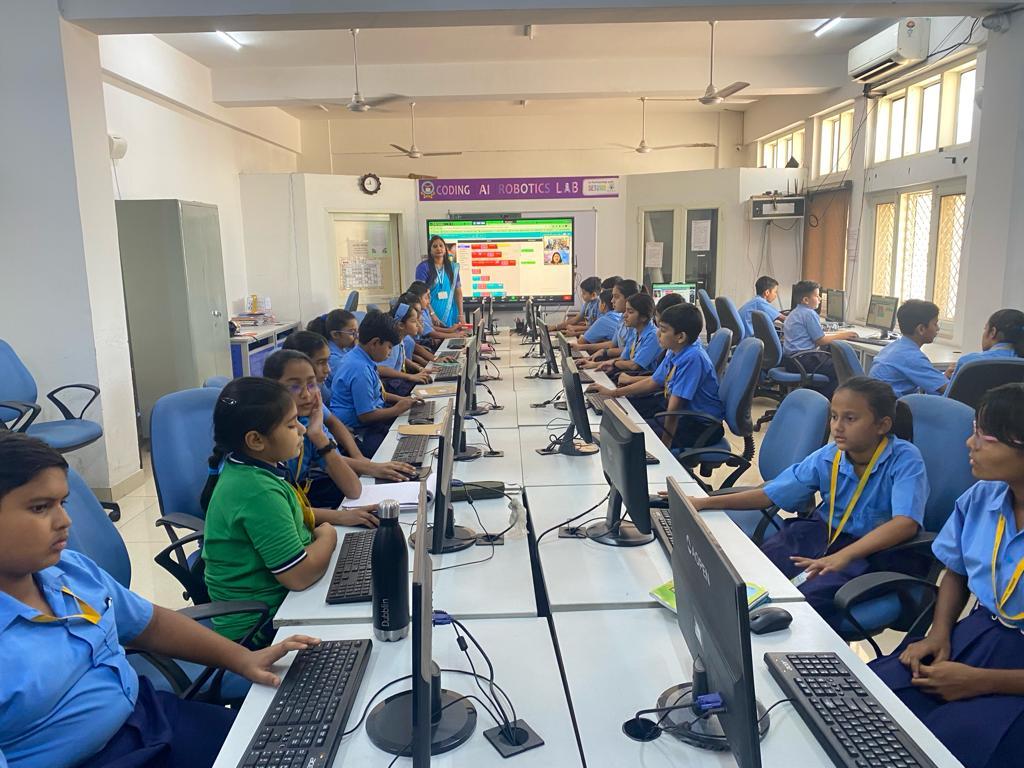
Students exploring coding and AI projects with their teacher

Responsible AI Education

AI Literacy Must Include AI Responsibility

As AI becomes increasingly accessible, students need to understand not only what AI can do, but also its limitations and responsibilities.

The Academy introduces students to questions such as:

Can we always trust an AI output?

What happens when AI makes a mistake?

Can AI be biased?

How should personal information be protected?

Who is responsible for decisions made with AI?

Students are introduced to concepts such as AI ethics, privacy, bias and responsibility, helping them develop the judgement necessary to use AI responsibly.

Designed for Indian Schools

International Framework. Indian Classroom.

CITIS AI Academy is designed to support the requirements of Indian schools and the changing direction of school education.

The program aligns with the broader emphasis of NEP 2020 and NCF 2023 on competency-based, experiential, multidisciplinary and skill-oriented learning. The source material also notes the introduction of a CBSE Computational Thinking and Artificial Intelligence curriculum framework for Classes III–VIII from Session 2026–27.

This creates an opportunity for schools to establish a structured Computational Thinking and AI pathway rather than introducing isolated coding or AI activities.

A Complete School Implementation Model

Not Just a Curriculum. An Ecosystem.

CITIS AI Academy is designed to make implementation practical for schools.

The ecosystem includes:

Curriculum

Structured, grade-appropriate learning pathways.

Digital Platform

A connected learning environment for students and educators.

Lesson Plans

Ready-to-use lesson plans and structured missions.

Teacher Support

Training and onboarding to help educators facilitate lessons confidently.

Student Dashboards

Progress monitoring and skill-based tracking.

Analytics

Performance insights to support monitoring and intervention.

AI-Assisted Support

AI-supported assistance within the learning environment.

The platform is designed to reduce dependence on specialist hiring or schools developing their own coding and AI curriculum from scratch.

No Specialist Infrastructure Required

The Academy is designed to work within a school's existing technology environment.

  • No specialised hardware required.
  • No specialist coding teacher required.
  • Works within the existing classroom setup.

Schools can begin with a pilot program and progressively scale it across grades and the institution.

Flexible School Implementation

CITIS can work with schools to integrate the Academy according to their academic structure.

Possible implementation models include:

ICT / Computer Periods

Integrate Computational Thinking, coding and AI into existing ICT periods.

STEM / Innovation Programs

Use the Academy as part of the school's STEM and innovation ecosystem.

AI Academy

Create a dedicated AI and future-skills program within the school.

Innovation Clubs

Use coding, AI and project-based learning for clubs and enrichment activities.

Enrichment Programs

Offer the program as an additional learning opportunity.

Phased Rollout

Begin with selected grades and progressively expand across the school.

The CODMOS implementation model specifically supports ICT/STEM periods, lab rotations, innovation clubs, enrichment blocks and phased grade-band rollouts.

Benefits to Students

Think Better

Develop logical reasoning, problem-solving and structured thinking.

Create with Technology

Move from consuming technology to building with it.

Learn Coding

Develop programming foundations through progressive learning.

Understand AI

Learn what AI is and how it works at an age-appropriate level.

Use AI Responsibly

Understand bias, privacy, responsibility and the importance of questioning AI outputs.

Develop Creativity

Create games, programs and technology-based projects.

Build Confidence

Experiment, make mistakes, debug and improve.

Prepare for the Future

Develop foundational skills relevant to further education, technology careers and an AI-enabled workplace.

Students working together on a hands-on technology project

Benefits to Schools

CITIS AI Academy enables schools to develop a structured technology-learning ecosystem without treating AI and coding as isolated add-ons.

Schools can benefit from:

  • A structured K–12 pathway
  • Computational Thinking development
  • Coding and programming education
  • AI literacy and responsible AI
  • Project-based learning
  • Ready lesson plans
  • Teacher enablement
  • Student dashboards
  • Learning analytics
  • Progressive grade-level curriculum
  • Integration with existing ICT/STEM infrastructure
  • Scalable institution-wide implementation

The central advantage is one connected system instead of multiple disconnected tools for coding, puzzles, mathematics enrichment and AI demonstrations.

A Stronger Future-Ready School Ecosystem

CITIS AI Academy can become the technology and innovation layer of a school's broader STEM ecosystem.

CITIS AI Academy

Computational Thinking + Coding + AI

CODMOS

Technology and curriculum platform

CITIS Science Lab

Experiential Science + Virtual Experiments

STEM & Innovation

Projects + Making + Problem Solving

Together, these initiatives can create a powerful AI + Coding + STEM + Experiential Learning ecosystem for K–12 education.

Why CITIS AI Academy?

Internationally Developed

CODMOS is developed in South Korea and brought to Indian institutions through the CITIS AI Academy framework.

K–12

A progressive learning journey rather than a standalone coding course.

Three Connected Skills

Think → Build → Command

Curriculum + Platform

Structured curriculum delivered through a connected digital learning system.

Practical & Experiential

Missions, puzzles, games, coding challenges and projects.

Measurable

Student progress dashboards, skill tracking and performance insights.

Responsible AI

AI literacy combined with ethics, privacy, bias and responsibility.

School-Ready

Designed for practical implementation within existing school infrastructure.

Build AI-Ready Learners

The future-ready student will not simply use technology.

They will understand it.

They will question it.

They will build with it.

And they will use Artificial Intelligence responsibly.

CITIS AI Academy, in technical collaboration with CODMOS, South Korea, gives schools a structured pathway to make that transformation possible.

Think. Build. Command.